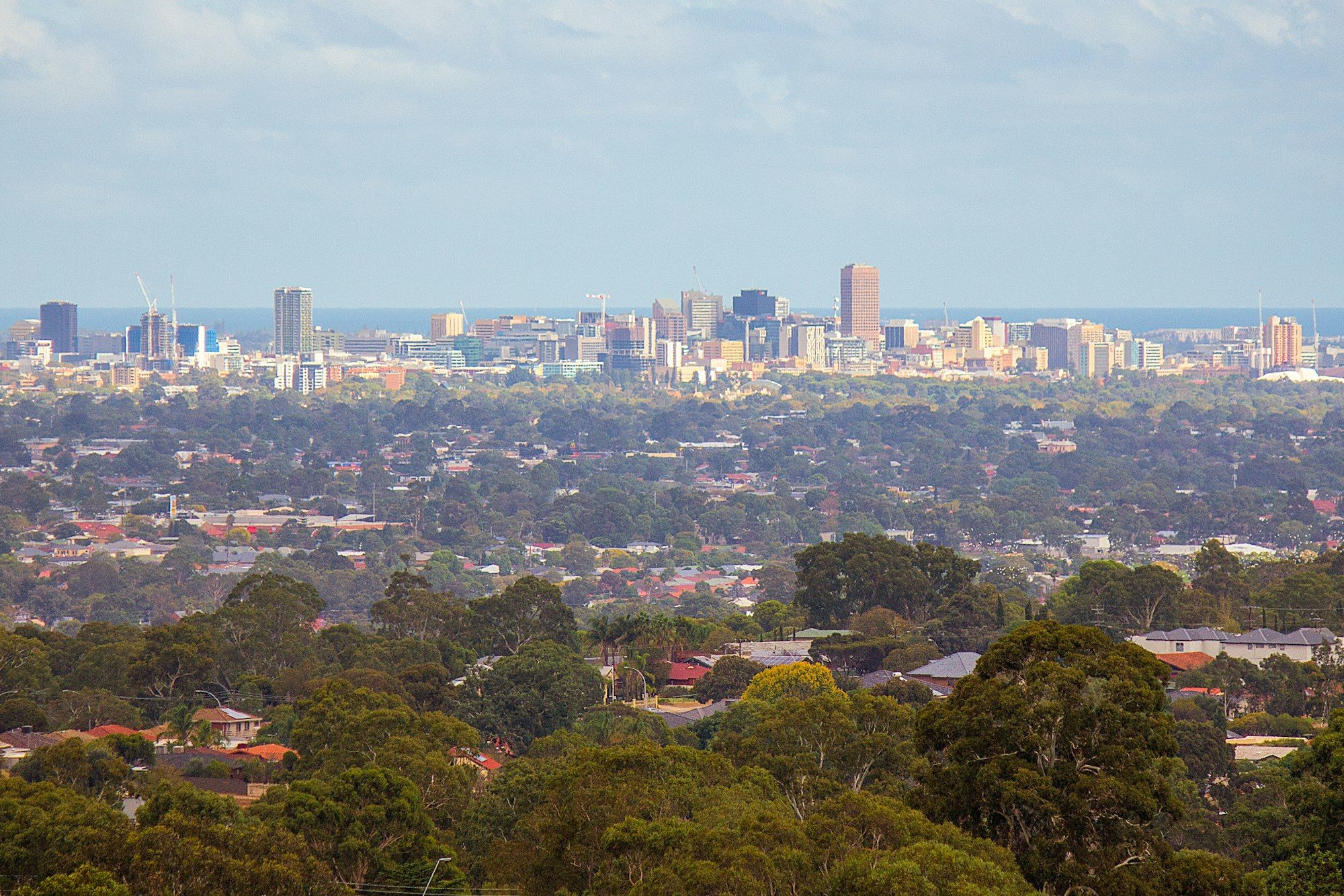
Business loans in South Australia should suit a state where plenty of businesses are paid long after they’ve done the work: the winemaker waiting on a vintage to sell, the defence supplier waiting on a prime contractor, the Riverland grower waiting on the packing shed. FastBiz Loans gives SA owners easy access to $5,000 to $500,000 through a short online application, with decisions in as little as 4 hours. Whether it’s a small business loan in Adelaide or equipment finance in Mount Gambier, one lending specialist handles it from start to finish.
What’s driving small business in South Australia?
South Australia’s small-business sector is growing steadily. ABS data reported by the state government counted 159,978 small businesses operating in SA, up from about 155,000 a year earlier, with restaurant and cafe numbers alone rising 5.1% over the 2023–24 financial year.
Adelaide’s economy has broadened well beyond its manufacturing roots. Health and education are major employers, the naval shipbuilding precinct at Osborne anchors a long defence pipeline, and the city has built a real niche in space, cyber and tech around Lot Fourteen. Construction and trades have been kept busy by housing demand across the northern and southern suburbs.
Outside Adelaide, the state’s regions each have a clear identity:
- Barossa, Clare Valley, McLaren Vale, Adelaide Hills and Coonawarra: wine, cellar doors, food tourism and the contractors who service them.
- Riverland (Renmark, Berri, Loxton): citrus, almonds, wine grapes and irrigation services.
- Limestone Coast (Mount Gambier): forestry and timber processing, dairy, beef and wine.
- Eyre Peninsula (Port Lincoln): tuna, oysters and other seafood, plus broadacre grain.
- Yorke Peninsula and the Mid North: grain and sheep country with busy harvest seasons.
- Upper Spencer Gulf (Whyalla, Port Augusta, Port Pirie): heavy industry, energy projects and the businesses that supply them.
- Murraylands and Fleurieu: food processing, farming and weekend tourism.
How does a wine-region business fund the gap between vintage and sale?
Wine is one of the clearest examples of money going out long before it comes back. Here’s how the costs typically fall for a small producer or contractor, and what can bridge each stage.
| Stage | Roughly when | What costs money | Product that often fits |
|---|---|---|---|
| Pre-vintage | Spring to early summer | Spraying, canopy work, irrigation, equipment servicing | Line of credit |
| Vintage | About February to April | Pickers, harvest contractors, fuel, grape purchases, bins | Line of credit, equipment finance for harvest gear |
| Winemaking | Autumn onwards | Barrels, tanks, presses, winery staff | Equipment finance, small business loan |
| Bottling and release | Months to years later | Glass, labels, bottling runs, marketing | Small business loan |
| Sale | Ongoing | Cellar door, online and wholesale sales; distributors on terms | Merchant cash advance for cellar doors, invoice finance for trade accounts |
The same “spend now, get paid later” logic applies to grain, citrus and almonds. Our agriculture page covers funding for growers and ag contractors in more depth.
What other SA seasons should you plan for?
- January: a major international cycling race brings crowds to Adelaide and the regions.
- February to March: Adelaide’s festival season, when the Fringe, the Adelaide Festival and music events fill the city. Hospitality, accommodation, event hire and staffing businesses need stock and casuals lined up before it starts.
- October to December: grain harvest on the Eyre and Yorke Peninsulas and in the Mid North, with freight and contractor costs peaking.
- November to December: Christmas retail and the pre-summer build season.
- July: payroll tax reconciliation, BAS and super all fall due.
For a month-by-month method, see our guide to seasonal cash-flow planning.
What’s the payroll tax threshold in South Australia?
RevenueSA lists a payroll tax threshold of $1.5 million a year (about $125,000 a month), in place since 1 January 2019. Payrolls just above the threshold pay a reduced, phased-in rate before the full rate applies. Monthly returns are due by the 7th of the following month, and the annual reconciliation is due by 28 July. It’s always worth checking the current threshold with RevenueSA before you budget, as state budgets can change it.
For most small SA employers, that threshold means payroll tax is a future consideration rather than a current one. For those approaching it, factor it into pricing before you take on a crew-heavy contract.
Who supports small business in South Australia?
- Small Business Commission SA. Facilitates alternative dispute resolution between small businesses, and between small businesses and state or local government, and advocates for the small-business community on shared issues.
- Small and Family Business SA. The state’s small-business hub, with a small business team that refers owners to advisory and support services, plus a directory of free and low-cost help.
- Industry Advocate South Australia. Helps local businesses find and compete for government contracts.
- Regional Development Australia offices. Offer business planning support across regional SA.
Example scenario — illustrative only. A machine-harvesting contractor in Nuriootpa picks for a dozen Barossa growers each vintage. Ahead of a busy year, he buys a second used grape harvester through equipment finance, with the machine as security, and draws on a line of credit to cover operators’ wages and fuel through February and March. Growers pay after each month’s work is invoiced, and by May the line is back to zero.
Which product suits which South Australian business?
- Cellar doors, cafes and bars with strong card sales: a merchant cash advance, repaid as a share of takings.
- Defence, construction and B2B suppliers on terms: invoice finance, up to 85% of invoice value.
- Harvest gear, trucks, kitchens and machinery: equipment finance from $10,000 to $500,000.
- Seasonal swings: a line of credit from $10,000 to $250,000.
- A single growth move: a small business loan from $5,000 to $500,000.
You’ll generally need 6+ months trading, $5,000+ monthly revenue, an active ABN, a business bank account and 3–6 months of statements. Every loan is priced on your business’s own situation, and we look for the sharpest option available. Apply online in about 60 seconds.
Your path to funds
Step 1
60-second enquiry, no credit score impact
Step 2
Specialist call about your season and what you're funding
Step 3
Digital bank statements, ID and ABN
Step 4
Decision in as little as 4 hours, e-sign, funds
Questions we get asked
Do you lend to wineries and grape growers in South Australia?
Yes, as long as the finance is for business purposes and the business meets the basics, including 6+ months trading and $5,000+ monthly revenue. Wine businesses often combine equipment finance for harvest and winery gear with a line of credit for vintage costs.
What is South Australia's payroll tax threshold?
RevenueSA lists a threshold of $1.5 million a year, equivalent to $125,000 a month, which has applied since 1 January 2019. A reduced, phased-in rate applies to payrolls just above the threshold, so check RevenueSA's rates and thresholds page for the current figures.
When are SA payroll tax returns due?
Monthly returns are due by the 7th of the following month, and the annual reconciliation is due by 28 July, a week later than in most other states. That extra week helps, but it still lands in the busy end-of-financial-year month.
Can an Adelaide cafe or bar use a merchant cash advance?
Often, yes. A merchant cash advance of $5,000 to $300,000 is repaid as a share of future card and EFTPOS takings, so repayments ease in a quiet week and rise when the Fringe crowds arrive. It suits businesses where most sales go through a terminal.
I supply the defence or government sector in SA. What helps with slow payments?
Invoice finance can release up to 85% of the value of approved B2B invoices, which helps when a prime contractor or agency pays on 30 to 60 day terms. For help finding government work, the state's Industry Advocate is a useful contact.
Who can help if my SA business is in a dispute?
The Small Business Commission SA facilitates alternative dispute resolution between small businesses, and between small businesses and state or local government. It's designed to resolve disputes quickly and fairly without going to court.