Manufacturing business loans are about keeping the floor running while cash is locked up in the process. Raw materials, work in progress, finished stock on the racks and invoices waiting to be paid all hold money that you’ve already spent. FastBiz Loans gives Australian manufacturers easy access to capital from $5,000 to $500,000, so a big order or a new machine becomes an opportunity, not a strain.
Why do manufacturers have so much cash tied up?
Because every stage of making things holds cash for a while. Accountants call the total the cash conversion cycle: how many days pass between paying for inputs and collecting cash from the customer. Here’s how it adds up for a typical small fabricator (illustrative only):
| Stage | Where the cash sits | Illustrative days |
|---|---|---|
| Raw materials | Steel, resin, timber or packaging on hand | 30 |
| Work in progress | Jobs on the floor, labour already paid | 15 |
| Finished goods | Stock waiting to ship | 20 |
| Debtors | Invoices waiting on customer payment | 50 |
| Less: supplier terms | Time your own suppliers give you to pay | –30 |
| Cash conversion cycle | Days your cash is tied up | 85 |
Grow sales by a third and the cash tied up grows by roughly a third too. Shorten any stage, for example by agreeing faster payment terms with a customer or holding less raw material, and cash comes back into the business without borrowing a cent. That’s why profitable, growing manufacturers often feel tight on cash. Our working capital cycle guide shows how to calculate your own number and which levers shorten it.
What do manufacturers usually finance?
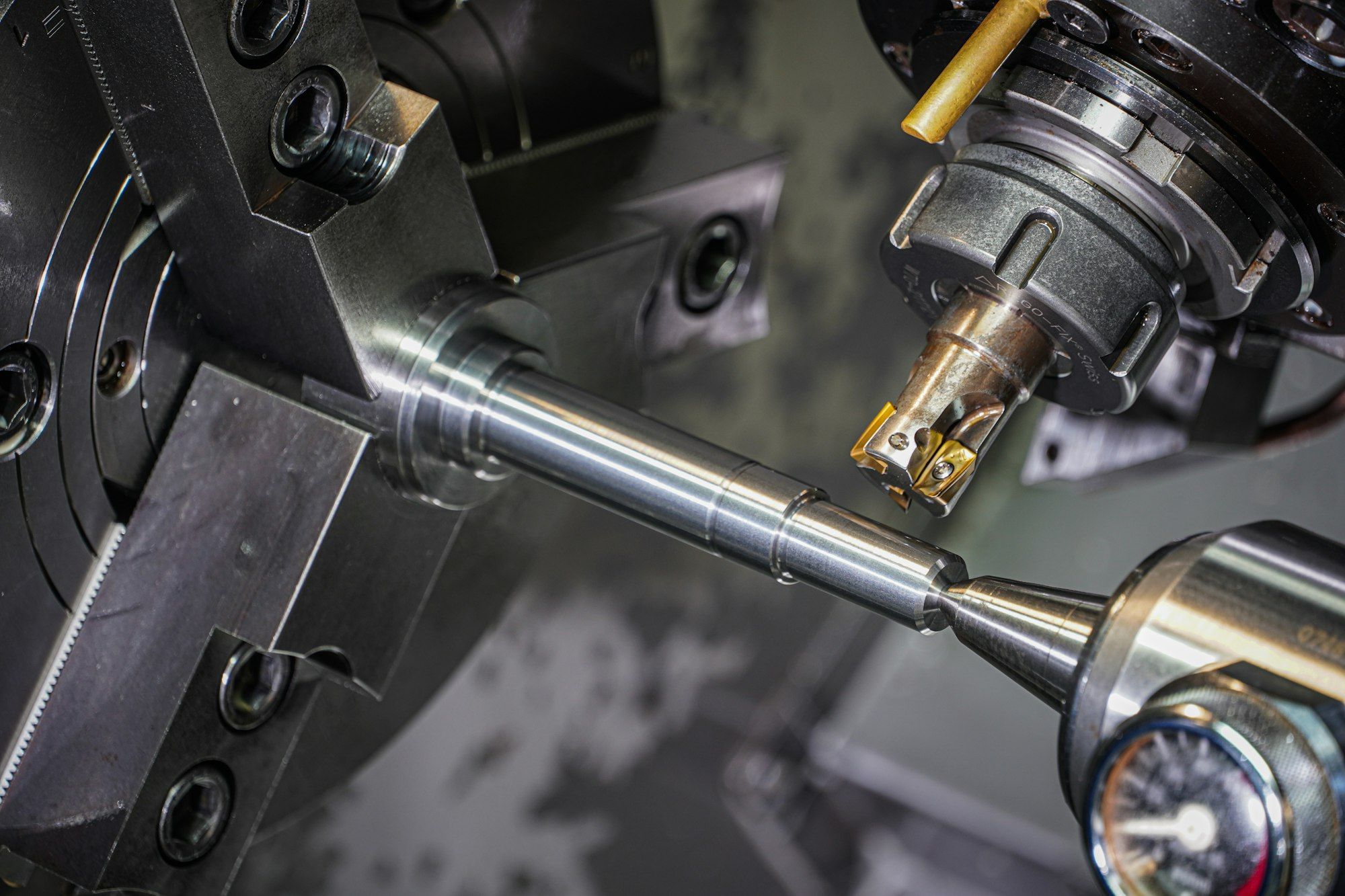
Machinery and technology. CNC mills and lathes, laser and plasma cutters, press brakes, injection moulders, packaging and labelling lines, compressors, robotic welders, 3D printers and ERP software.
Materials and orders. Bulk raw materials when prices are right, and the inputs for a large confirmed order.
Capacity. A second shift, a factory extension, racking and forklifts, or a move to a bigger site.
Speed to market. Tooling and moulds for a new product line, or certification and testing before a big customer signs on.
Which manufacturing finance product fits which need?
| Need | Product | Fit and why |
|---|---|---|
| New or used machinery | Equipment Finance ($10k–$500k) | Strong. The machine usually forms the security, and repayments are often matched to its working life |
| Waiting 30–60 days on customer invoices | Invoice Finance (up to 85% of invoice value) | Strong for B2B manufacturers selling to wholesalers, builders or retailers |
| Raw materials, wages during production | Line of Credit ($10k–$250k) | Strong. Draw as orders start, repay as invoices are paid |
| Big contract set-up, tooling, factory fit-out | Small Business Loan ($5k–$500k) | Good for one-off projects with a clear payback |
| A factory-door shop or showroom with card sales | Merchant Cash Advance ($5k–$300k) | Limited. Only where card takings are steady |
| A new manufacturer under six months old | Startup Loan ($5k–$150k) | Case by case on experience, assets, security and plans |
How do you finance a big contract without stretching the business?
Split the need into its parts, then fund each part with the product that matches it. A large order usually has three:
- Set-up costs, such as tooling, a new fixture or extra racking, funded with a small business loan or equipment finance.
- Production costs, such as materials and overtime, covered by drawing on a line of credit.
- The payment wait, bridged with invoice finance once goods are delivered and invoiced.
Matching the money to the job means each part is repaid by the thing it paid for. It also keeps your everyday line of credit free for the rest of the business, so one big customer never crowds out the others. Our business growth finance page covers this approach for other growth moves too.
Example scenario — illustrative only. A Dandenong metal fabricator wins a contract to supply balustrade components to a national builder, paid at end of month plus 45 days. The owners finance a second press brake with equipment finance and draw on a line of credit for the first steel order. As each batch is delivered and invoiced, invoice finance releases up to 85% of the invoice value, which repays the line and funds the next batch.
What’s the current picture for Australian manufacturers?
Steady rather than booming. The ABS counted a 0.2% rise in manufacturing businesses in 2025–26, so growth is coming from existing firms winning more work rather than lots of new entrants. A few 2026 points shape the numbers:
- Wages: modern award wages rose 4.75% from 1 July 2026, and Payday Super now links super to every pay run.
- Equipment write-offs: the ATO’s $20,000 instant asset write-off for businesses with turnover under $10 million is now permanent from 1 July 2026. It suits tooling, smaller machines and tech. Your accountant can confirm what applies.
- Payment times: under the federal Payment Times Reporting Scheme, large businesses must publicly report how quickly they pay small suppliers. It’s worth checking a big customer’s record before you agree to their terms.
What will a lender want to see?
Manufacturing applications move fastest when the lender can see the whole loop. Have these ready:
- 3–6 months of business bank statements, shared digitally
- Photo ID and your ABN or ACN
- A supplier quote or tax invoice for any machinery
- A debtor list and customer details for invoice finance
- Financial statements for amounts over $150,000
- A purchase order or contract, if you’re funding a specific job
Decisions can come in as little as 4 hours, and same-day funding is possible once you’re approved and have signed. Start your 60-second enquiry and a lending specialist will help you match finance to the way your factory actually runs.
Your path to funds
Step 1
60-second online enquiry
Step 2
Share bank statements plus a machine quote or debtor list
Step 3
Specialist matches the product to the order or machine
Step 4
Decision in as little as 4 hours, e-sign, funds released
Questions we get asked
Can I finance a used CNC machine or imported equipment?
In many cases, yes. Used and imported machinery can be financed when it's clearly identified and has a supplier invoice. For imports, lenders will want to understand when the machine arrives and is installed, because that affects how it's secured.
Can invoice finance fund a single large order?
Selective invoice finance lets you fund individual invoices rather than your whole ledger, which suits a one-off large order. The strength of the customer you're invoicing is a big part of the assessment.
Can I borrow to buy raw materials for a new contract?
Yes. A small business loan or line of credit is often used to buy materials for a confirmed order. A purchase order or signed contract from your customer helps the lender see how the money comes back.
How do lenders treat a manufacturer with one major customer?
Customer concentration is common in manufacturing and isn't a deal-breaker. Lenders look at how long the relationship has run, how reliably that customer pays and whether you have other income alongside it.
Do I need financial statements for machinery finance?
Only if the amount is over $150,000. Below that, bank statements, ID, your ABN and the supplier's quote or invoice are usually enough to start.