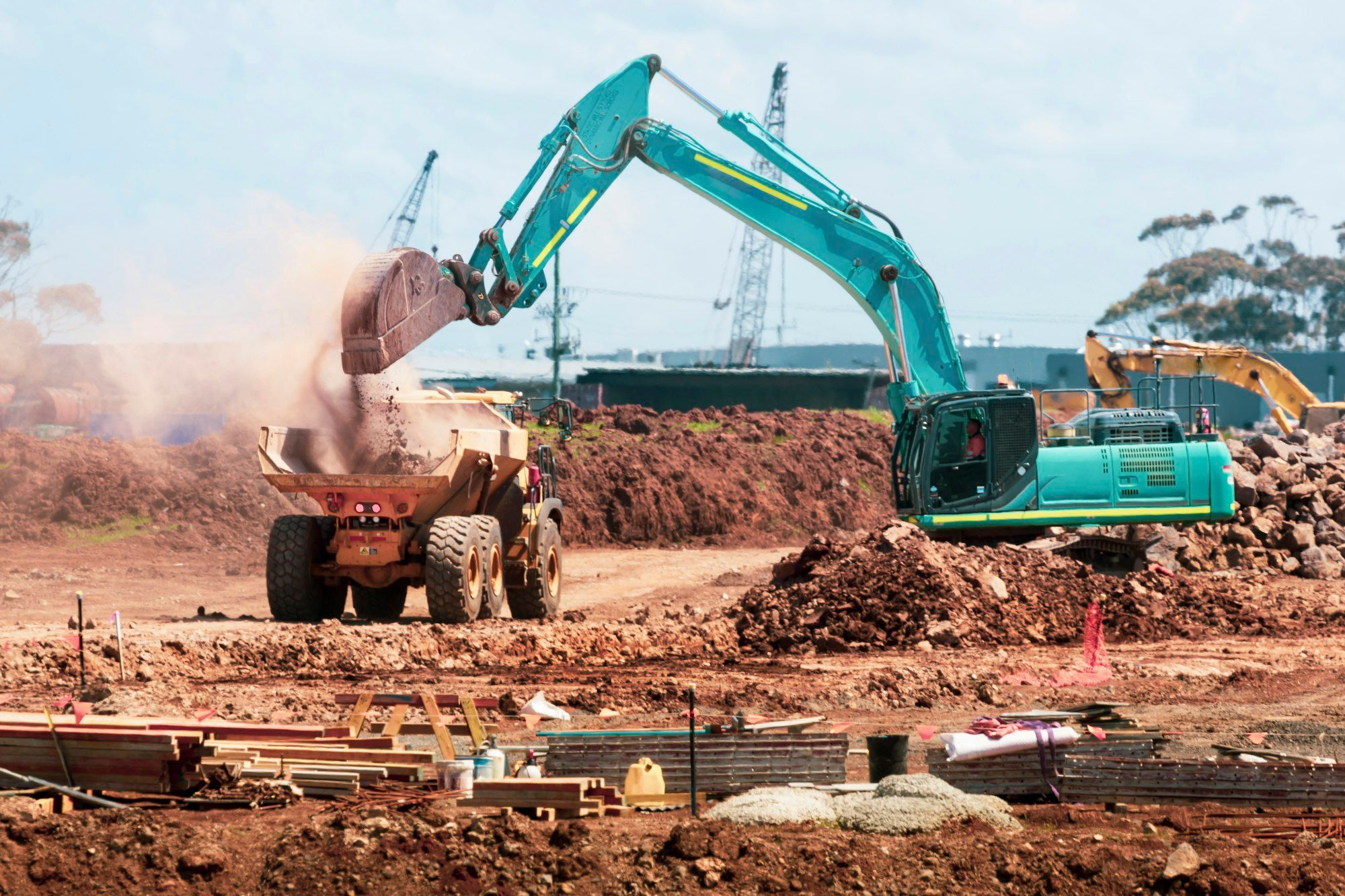
Equipment finance and the instant asset write-off are two of the most useful tools a growing Australian business has, and they work well together. One lets you get the equipment working now without draining cash. The other can bring forward the tax deduction on that equipment into the year you start using it. Used together and timed well, they help you invest in capacity while keeping your cash flow intact.
There’s welcome news for planning, too. After years of year-by-year extensions, the ATO has confirmed that the $20,000 instant asset write-off is permanent for small businesses from 1 July 2026.
What is the instant asset write-off?
The instant asset write-off lets an eligible small business deduct the full cost of a qualifying asset in the year it’s first used or installed ready for use, instead of depreciating it over several years. It’s a timing benefit: you claim the deduction sooner.
Here are the current rules, as set out by the ATO:
| Rule | What it means |
|---|---|
| Who | Businesses with aggregated turnover of less than $10 million that use the simplified depreciation rules |
| Threshold | Each asset must cost less than $20,000 |
| Per asset | The limit applies to each asset, so you can write off several in one year |
| Timing | The asset must be first used or installed ready for use in the income year you claim it |
| Business use | Only the business-use portion of the cost is deductible |
| Assets of $20,000 or more | Can generally go into the small business pool, deducted at 15 per cent in the first year and 30 per cent each year after |
| Pool balance | If the pool balance is under $20,000 at the end of an income year, it can be written off |
What are the thresholds for 2025–26 and 2026–27?
The threshold is $20,000 for both years, and it now continues from 1 July 2026 onward.
| Period | Threshold | Status |
|---|---|---|
| 1 July 2025 – 30 June 2026 (2025–26) | Under $20,000 per asset | Legislated in the Treasury Laws Amendment (Strengthening Financial Systems and Other Measures) Act 2025 |
| From 1 July 2026 (2026–27 onward) | Under $20,000 per asset | Announced in the 2026–27 Budget on 12 May 2026 as a permanent measure; the ATO confirms it is now law |
The ATO also confirms that the rule stopping small businesses re-entering the simplified depreciation regime for five years after opting out remains suspended until 30 June 2027.
How does equipment finance interact with the write-off?
The key question is whether your business holds the asset for tax purposes. That depends on the type of equipment finance you choose.
| Finance structure | Who owns the equipment | How it generally interacts with the write-off |
|---|---|---|
| Chattel mortgage | Your business, from day one; the lender takes security over it | Your business can generally claim depreciation, including the instant asset write-off if eligible |
| Hire purchase | The financier until the final payment, but tax law generally treats your business as the holder | Your business can generally claim depreciation, including the write-off if eligible |
| Finance lease | The financier; you rent the equipment | You generally deduct lease payments instead; the write-off usually isn’t available to you |
In every case, equipment finance lets you spread the cost while the equipment earns for your business. With a chattel mortgage, the equipment usually forms the security and the lender registers its interest on the national Personal Property Securities Register. Our equipment finance page explains each structure in more depth.
A worked example
Example scenario — illustrative only. A Ballarat electrician, trading as a company with turnover well under $10 million, needs three items before a large commercial fit-out:
Item Cost (GST-exclusive) Instant write-off? Scissor lift $18,500 Yes — under $20,000 Thermal imaging camera and test gear $9,800 Yes — under $20,000 Second-hand work van $36,000 No — goes into the small business pool She finances all three together with a chattel mortgage, so the business owns them from day one and keeps its cash for wages and materials. The lift and the test gear, each under $20,000, can be written off in the year they’re first used. The van is deducted over time through the pool. Because everything was delivered and put to work in May, the deductions fall in the current income year rather than the next.
Note what the example doesn’t say: the write-off doesn’t reduce what the equipment costs. It’s a deduction against taxable income, and the benefit depends on the business’s tax position.
How do I time equipment purchases well?
Timing is where owners most often miss out. Work backwards from the date the equipment needs to be working.
- Decide what you need and get quotes early. Popular machinery and vehicles can have long lead times.
- Check whether each item is under $20,000 (for GST-registered businesses, the cost is generally worked out net of the GST credit).
- Arrange finance before you commit. Knowing your approval lets you place the order with confidence.
- Get a proper tax invoice from the supplier showing the item, serial number or VIN, and price.
- Make sure it’s delivered and installed ready for use in the income year you want to claim it — not just ordered.
- Keep records of the invoice, delivery date and finance documents for your accountant.
The rush before 30 June is real. Suppliers get busy, delivery windows fill up, and finance applications arrive in a wave. Applying in April or May rather than the last week of June gives you breathing room.
Is equipment finance the right way to fund it?
Equipment finance usually suits when:
- The equipment will earn or save money over several years
- You’d rather keep cash free for wages, stock and day-to-day costs
- The item has a clear value and identity (machinery, vehicles, tools, tech)
- You want repayments often matched to the working life of the equipment
Paying cash may suit if the item is small, cash is plentiful and you have no better use for it. For day-to-day costs rather than assets, a small business loan or line of credit is usually a better match. If you’re planning a bigger expansion, our business growth finance page covers how to fund the whole plan.
Tax rules apply differently to every business, so talk to your accountant about how the write-off applies to you.
Get the equipment working sooner
FastBiz Loans offers equipment finance from $10,000 to $500,000 for new and used machinery, vehicles, tools and technology, with decisions in as little as 4 hours once your documents are in. Have your supplier invoice ready and start the 60-second enquiry at apply now. Working in the building industry? See our construction and trades page.
Questions we get asked
Is the $20,000 instant asset write-off permanent?
Yes. The ATO confirms the $20,000 threshold is permanent for small businesses from 1 July 2026, following the 2026–27 Budget. Before that, the same $20,000 limit had been extended for 1 July 2025 to 30 June 2026.
Can I claim the write-off on equipment I finance?
Often, yes. What matters is that your business holds the asset for tax purposes, its cost is under the threshold and it's first used or installed ready for use in the income year. With a chattel mortgage, your business owns the asset from the start. A true lease works differently.
Is the $20,000 limit per asset or in total?
Per asset. The ATO says the limit applies on a per-asset basis, so a business can write off several eligible assets in the same year as long as each one costs less than $20,000.
Does the write-off mean the equipment is free?
No. It's a tax deduction that reduces your taxable income, not a rebate of the purchase price. The actual tax benefit depends on your business's tax position, and you still pay for the equipment.
What if my equipment costs more than $20,000?
It can't be written off immediately, but it can generally go into the small business simplified depreciation pool, where it's deducted over time. Equipment finance works the same way either way.
Is it the purchase date or the delivery date that counts?
The key test is when the asset is first used or installed ready for use. Buying something in June that isn't delivered or set up until July usually falls into the next income year.
Does GST affect the $20,000 threshold?
For GST-registered businesses, the cost is generally worked out after deducting the GST credits you can claim, which your accountant can confirm for your situation.