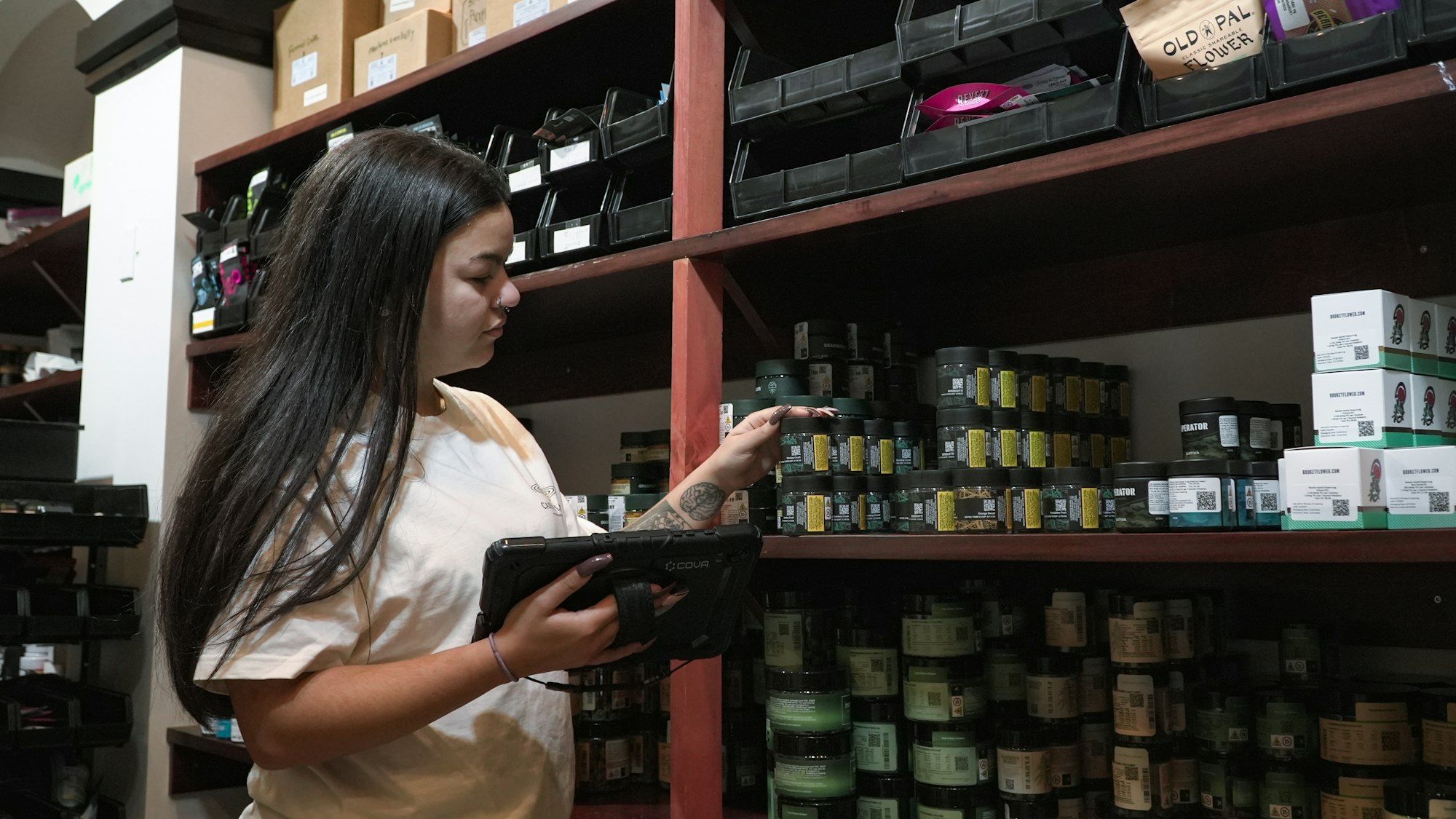
Retail business loans are really about timing. An independent shop pays for stock months before a customer walks in to buy it, and the best-stocked store on the strip in December is usually the one that sorted its capital in August. FastBiz Loans makes that capital easy to reach, with $5,000 to $500,000 available through one short online application.
What does the retail cash cycle look like across a year?
It’s a loop: buy, display, sell, reorder. The catch is that buying happens well ahead of selling. For a typical gift, fashion or homewares store, the year looks something like this:
| Months | What you’re buying | What you’re selling |
|---|---|---|
| January–February | Clearing slow lines, back-to-school top-ups | Post-Christmas sales, gift card redemptions |
| March–May | Winter range, Mother’s Day stock | Autumn trade, Easter |
| June | Reordering bestsellers | End-of-financial-year sales |
| July–September | Placing Christmas orders, paying import deposits | Winter trade, Father’s Day |
| October–November | Balance on Christmas stock, extra casual staff | Early Christmas shoppers, spring events |
| December | Last-minute reorders | The biggest weeks of the year |
The squeeze usually lands between August and November, when stock invoices peak and the Christmas takings haven’t arrived yet.
Why is stock the biggest cash question in retail?
Because stock is cash sitting on a shelf. Local wholesalers may give you trade terms, but many suppliers, and most overseas manufacturers, want a deposit when you order and the balance before the goods ship. Add freight, GST at the border and the weeks it takes to sell through, and one container can tie up a good chunk of your working capital for a whole season.
Finance works well here when it’s matched to the stock cycle: draw when you order, repay as it sells. Our working capital cycle guide shows how to measure how long your cash is tied up, and which levers shorten it.
How are card payments changing for retailers?
Card is now how most Australians pay. The RBA’s 2025 Consumer Payments Survey found about 19% of in-person payments were made in cash. Two things follow from that:
- Your bank statements tell a clear story. Daily card settlements give lenders a detailed picture of trade, which helps decisions come quickly.
- Card costs matter more. Card surcharges are being removed from 1 October 2026 under the RBA’s payments reforms, so those costs will need to sit inside your prices. It’s a good moment to review your terminal plan and your margins.
Online matters too. Before the ABS retired its monthly retail series, online sales were running at 12.7% of total retail turnover in June 2025, up from 11.6% a year earlier. Many independents now sell in-store and online, and both income streams count when a lender reads your statements. If online is becoming your main channel, our e-commerce finance page goes deeper.
Which finance product suits which retail need?
| Product | Good for in retail | Not ideal for |
|---|---|---|
| Line of Credit ($10k–$250k) | Seasonal stock buying, import deposits, extra Christmas casuals | Long-term purchases like a full fit-out |
| Merchant Cash Advance ($5k–$300k) | Shops with steady card takings that want repayments to flex with sales | Stores with very new or mostly non-card revenue |
| Small Business Loan ($5k–$500k) | Fit-outs, a second store, a big opportunistic stock buy, a new website | Everyday expenses that a line of credit handles better |
| Equipment Finance ($10k–$500k) | POS systems, refrigeration, display technology, a delivery van | Stock (it isn’t equipment) |
| Startup Loan ($5k–$150k) | A new store under six months old, run by owners with retail experience | Established stores, which have more options |
| Invoice Finance (up to 85%) | Only if you also wholesale to other businesses on terms | Counter sales, which are paid on the spot |
How can a shop free up cash before it borrows?
Finance works best on top of a tidy stock position. Before you apply, it’s worth a quick check:
- Know your sell-through. Which lines turn over in weeks, and which have sat since last winter? Clearing slow stock is the cheapest capital you’ll ever find.
- Ask about supplier terms. Some wholesalers offer longer terms or seasonal dating for reliable customers.
- Stagger deliveries. Asking for your Christmas order in two drops, not one, spreads the cash out.
- Separate one-off and seasonal needs. Fund a fit-out with a loan and seasonal stock with a line of credit, so each is repaid by the thing it pays for.
Lenders like to see this kind of thinking, and it usually means you borrow less.
What does a well-timed stock loan look like?
Example scenario — illustrative only. A Toowoomba homewares store places its Christmas order with two overseas suppliers in August. The owner draws $45,000 from a line of credit to pay the deposits, then another $30,000 in October for the balances and freight. Sales from mid-November onwards repay the line, and by February it’s back to zero, ready for the winter range.
What do lenders look for in a retailer’s statements?
A lender reading a shop’s bank statements is mostly asking three questions:
- Is revenue consistent? Daily card settlements with a sensible seasonal pattern are a strong sign.
- How does the account handle the stock peaks? Few dishonours and few overdrawn days, even in the pre-Christmas buying months.
- What else is being repaid? Other finance repayments, buy-now-pay-later settlements for your own purchases and ATO payments all shape how much fits comfortably.
The ABS counted retail trade businesses as essentially flat in 2025–26, up just 0.1%. In a steady market, independents grow by winning share, and being properly stocked for the big weeks is one of the simplest ways to do that.
How quickly can a retailer get funded?
Decisions can come in as little as 4 hours, and same-day funding is possible once you’re approved and the documents are signed. You’ll need 3–6 months of business bank statements, photo ID and your ABN, plus financial statements if you’re borrowing more than $150,000.
Planning your next buying season? Start your 60-second enquiry. It doesn’t affect your credit score, and a lending specialist will help you match the product to your stock cycle.
Questions we get asked
When should a retailer arrange finance for Christmas stock?
Ideally before you place your main orders, which for many shops is between July and September. Arranging a line of credit early means the money is ready when suppliers want paying, rather than chasing it in November.
Can I use a business loan to buy a whole range from overseas?
Yes, stock purchases are a common use of a small business loan or line of credit. Allow for the deposit, the balance before shipping, freight and GST at the border, so you borrow for the full landed cost.
Is a merchant cash advance better than a loan for a shop?
It depends on how even your trade is. If takings swing a lot across the year, repayments that move with card sales can be easier to live with. If trade is steady and you're funding something long-lived, a fixed small business loan is often simpler.
Can I finance a shop fit-out?
Yes. Shelving, counters, lighting and signage can be funded with a small business loan, and some fixtures and technology suit equipment finance. A contractor's quote helps the lender understand the project.
Do online sales count towards my revenue?
Yes. All business revenue coming into your business account counts, whether it's from the shop counter, your website or a marketplace. It helps if payouts land in the same business account.