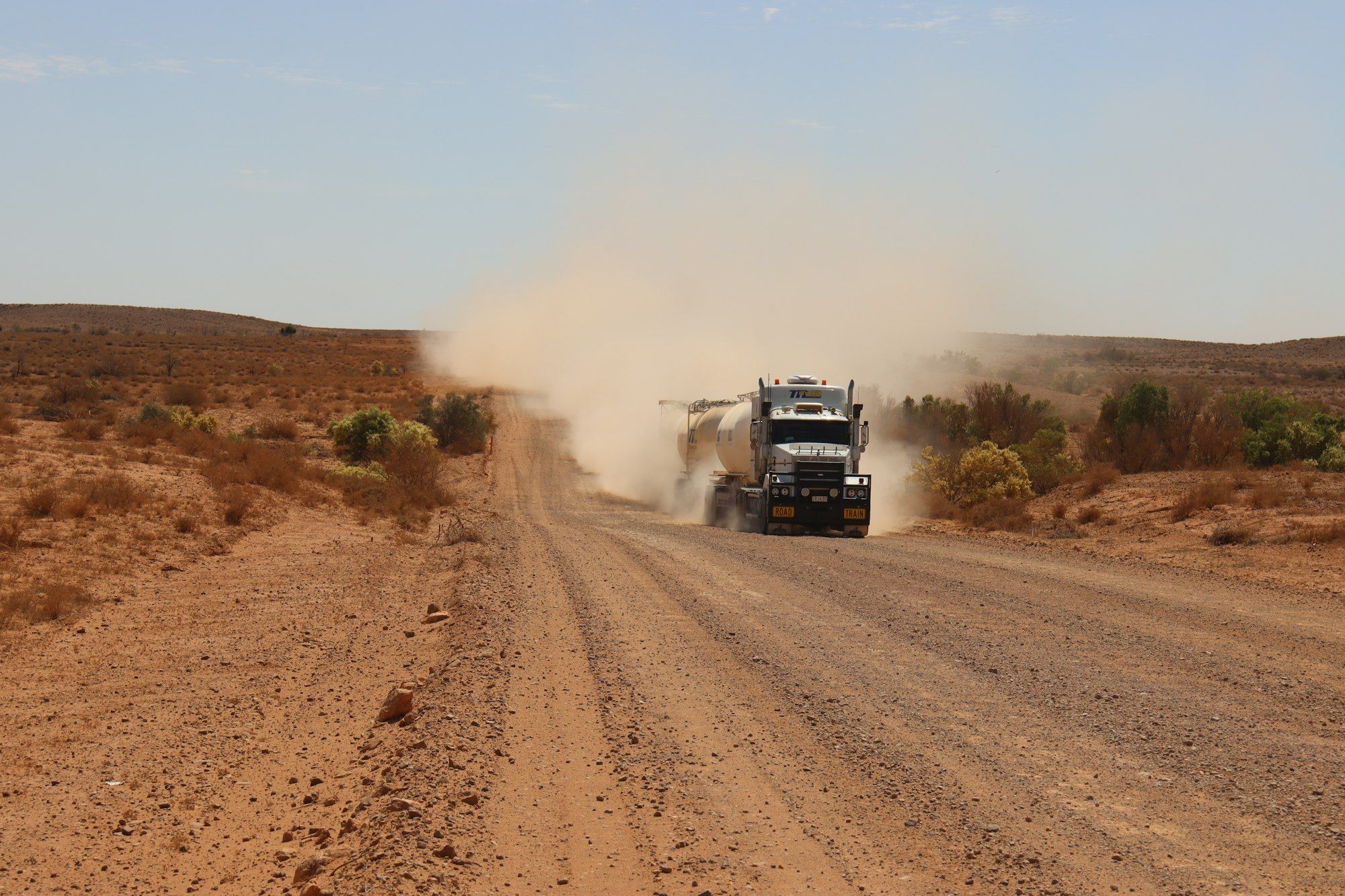
Transport business loans keep wheels turning while the paperwork catches up. A freight business pays for diesel at the bowser, drivers every week and tyres whenever they wear out, then invoices customers who pay a month or two later. FastBiz Loans gives trucking, courier and logistics operators easy access to capital from $5,000 to $500,000, matched to how freight money really moves.
Why do transport businesses wait so long to get paid?
Because freight is sold on account. Most business customers pay transport invoices on 30-day terms, and larger shippers often stretch to end of month plus 30 or longer. Meanwhile your costs are almost all immediate:
- Fuel, paid daily or weekly on a fuel card
- Driver wages and subcontractor owner-drivers, paid weekly
- Super, which under Payday Super must now reach each employee’s fund within 7 business days of payday
- Tolls, maintenance and tyres, paid as they happen
- Registration and insurance, which land as large annual bills
The busier you get, the wider the gap becomes. A new contract with a big shipper is great news, but it can mean carrying six or eight weeks of extra costs before the first payment arrives.
How does invoice finance work for a freight business?
It turns an unpaid freight invoice into cash within days, not weeks. For transport businesses invoicing other businesses, it’s often the most natural fit.
- You complete the run and invoice your customer as usual.
- You submit the invoice (or your whole debtor ledger) to the financier.
- You receive up to 85% of the invoice value upfront.
- When your customer pays, you receive the balance, less the financier’s charges.
The limit tends to grow with your sales, which suits a fleet that’s adding contracts. Lenders will want details of your debtors, because the strength of the businesses you invoice matters as much as your own. Our invoice finance vs business loan comparison helps if you’re weighing the two.
What happened with fuel costs in 2026?
Fuel became the headline cost for every operator this year. After the federal government announced a National Fuel Security Plan in March 2026, fuel excise was temporarily cut from 1 April, and the heavy vehicle road user charge was set to zero from 1 April to 30 June. The ATO changed fuel tax credit rates to match, and the temporary excise relief ended on 3 August 2026.
For transport businesses, the lesson is less about any one change and more about volatility. When fuel prices and fuel tax credit rates move mid-quarter, the amount you claim back on your BAS moves too. A business line of credit is a practical buffer here: draw when fuel spikes, repay when the BAS refund or customer payments arrive.
Which finance product suits which transport need?
| What you’re funding | Best-fit product | Notes |
|---|---|---|
| Prime movers, rigids, trailers, vans, forklifts | Equipment Finance ($10k–$500k) | New or used. The vehicle usually forms the security; repayments are often matched to its working life |
| Waiting on freight invoices | Invoice Finance (up to 85% of invoice value) | Strong fit for B2B freight with 30–60 day terms |
| Fuel spikes, tyres, rego and insurance | Line of Credit ($10k–$250k) | Draw, repay and draw again as costs arrive |
| Taking on a big new contract or a depot | Small Business Loan ($5k–$500k) | A lump sum to cover set-up costs until invoices start flowing |
| A new owner-driver or courier business | Startup Loan ($5k–$150k) | Under six months trading; assessed on experience, assets and plans |
| Merchant Cash Advance | Rarely suitable | Freight is paid by invoice, not card |
Example scenario — illustrative only. A Townsville refrigerated transport operator with six trucks wins a supermarket distribution contract paid at end of month plus 30 days. To service it, he adds a used refrigerated rigid through equipment finance, and sets up invoice finance on the new customer’s invoices. Each week’s deliveries are invoiced and funded within days, so fuel and wages are covered while the contract ramps up.
How do lenders assess a transport or logistics business?
They focus on the reliability of your freight income and how well your account handles the gaps. Expect questions about:
- Who your customers are and how concentrated your income is
- Contract length for your main customers, if you have written agreements
- Your fleet, including what’s owned outright and what’s already financed
- Fuel card and toll accounts, which show up clearly in bank statements
- Your ATO position, including BAS lodgement and any payment plans
Transport is one of Australia’s fastest-growing business sectors by count. The ABS reported transport, postal and warehousing businesses rose 4.9% to 261,109 in 2025–26.
What compliance dates should transport operators plan around?
If you pay contractors to deliver courier or road freight services, you may need to lodge a taxable payments annual report (TPAR) with the ATO by 28 August each year. Most operators also juggle quarterly BAS with fuel tax credits, and Payday Super now ties super to every pay run. On the equipment side, the ATO’s instant asset write-off lets businesses with turnover under $10 million deduct eligible assets costing less than $20,000 each. That tends to suit workshop tools, telematics and tech upgrades rather than whole trucks. Your accountant can confirm the detail.
How fast can a transport business get funded?
Decisions can come in as little as 4 hours, and same-day funding is possible once you’re approved and have signed. Equipment finance moves fastest with the seller’s invoice in hand, and invoice finance needs your debtor details. Sole-trader owner-drivers can read our page on business loans for sole traders for what’s different.
Start your 60-second enquiry from the cab or the depot. It won’t affect your credit score.
Your path to funds
Step 1
60-second enquiry online
Step 2
Link bank statements; add truck invoice or debtor list if relevant
Step 3
Lending specialist confirms the best-fit product
Step 4
Decision, e-sign and funding — same day possible
Questions we get asked
Can I finance a second-hand truck from a private seller?
Often, yes. Used trucks, prime movers and trailers can be financed from dealers and, in many cases, private sellers. The lender will want the vehicle details and a bill of sale or invoice, and may want to confirm the asset is free of existing finance.
Will my freight customers know I'm using invoice finance?
It depends on the arrangement. With some facilities your customers pay into a nominated account; with others the arrangement is confidential and you collect as usual. Your lending specialist will explain which applies before you sign.
Can an owner-driver get a transport business loan?
Yes. Owner-drivers operating as sole traders or companies can apply if they meet the basics, including six months of trading, $5,000 or more in monthly revenue and an active ABN. Contract income from a single freight company is common and is assessed on its reliability.
Can I fund registration and insurance with a loan?
Yes. Heavy vehicle registration and fleet insurance are big annual bills, and many operators use a small business loan or line of credit to spread them out rather than draining working capital in one month.
Do I need financials for truck finance?
Only if the total amount is over $150,000. Below that, 3–6 months of bank statements, ID, your ABN and the vehicle invoice are usually enough to get started.
Is a merchant cash advance suitable for a transport business?
Rarely. Freight customers usually pay by bank transfer against invoices, so there aren't the card takings a merchant cash advance is repaid from. Invoice finance or a line of credit usually suits better.