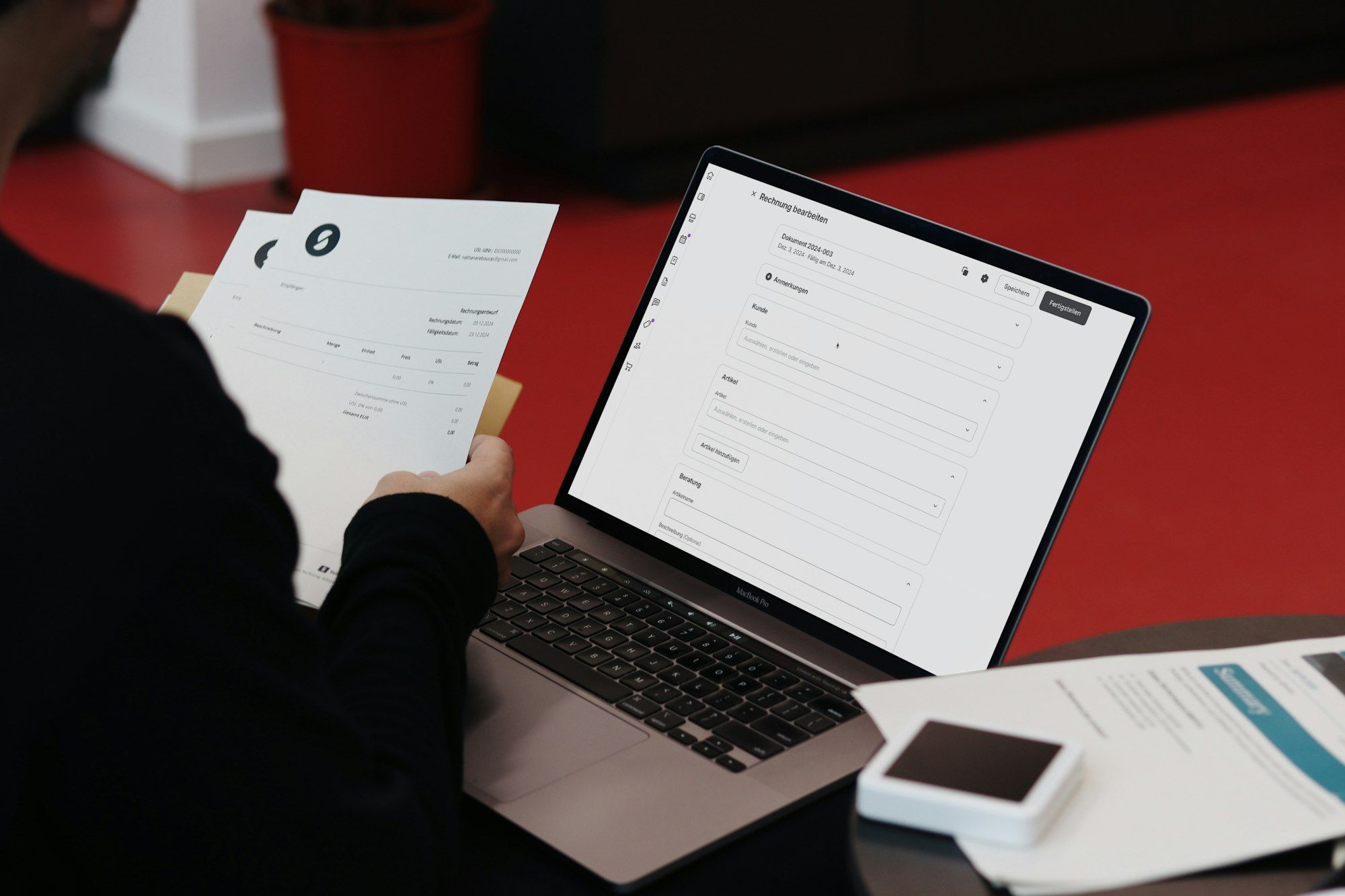
Understanding how invoice finance works starts with a simple frustration most B2B owners know well: you’ve done the work, sent the invoice, and now you wait 30, 60 or even 90 days to be paid. Meanwhile, wages, suppliers and the next job all need money now. Invoice finance closes that gap by turning unpaid invoices into cash within days of raising them.
The problem is common enough that the federal government runs a Payment Times Reporting Scheme, which requires large businesses to report publicly on how quickly they pay their small business suppliers. The Small Business Ombudsman describes cash flow as vital to the survival of small and family businesses. Invoice finance is one of the most direct tools for keeping it moving.
What is invoice finance, in one sentence?
Invoice finance is funding advanced against the unpaid invoices your business customers owe you — typically up to 85% of each invoice’s value up front, with the rest paid to you (less fees) when the customer settles.
It’s sometimes called debtor finance, because your customers who owe you money are your “debtors”, and the money they owe sits on your books as “receivables”.
How does invoice finance work, step by step?
Here’s the full cycle from invoice to cash.
- You do the work and raise an invoice. Nothing changes about how you trade. You deliver, then invoice your business customer on your normal terms.
- You submit the invoice to the lender. Along with it, the lender needs details of the customer (the debtor). The first time, you’ll also share an aged debtors report — a list of who owes you what and for how long.
- The lender checks the invoice and the debtor. It confirms the invoice is genuine, the work has been done, and the customer is a creditworthy business.
- You receive an advance. Up to 85% of the invoice value lands in your account. This is money you can use straight away for wages, stock or the next job.
- Your customer pays. Depending on the structure, they pay the lender directly or pay into an account you both use.
- The balance comes back to you. Once the invoice is paid, the lender releases the remaining amount to you, less its agreed fees.
Then it repeats with your next invoices. As your sales grow, so does the funding available.
An illustrative invoice, worked through
Example scenario — illustrative only. A Brisbane commercial cleaning company finishes a month’s work for a property manager and issues a tax invoice for $30,000 on 45-day terms.
Stage What happens Cash to the cleaning company Day 1 Invoice raised and submitted — Shortly after Lender verifies invoice and debtor, then advances up to 85% Up to $25,500 Day 45 (or when paid) Property manager pays the full $30,000 — Settlement Lender releases the remaining $4,500, less its agreed fees The balance, less fees Instead of waiting six weeks, the company has most of its money within days and uses it to cover next month’s wages. The fees are the cost of that speed — worth weighing against what the early cash lets the business do.
This example uses round numbers to show the mechanics. Actual advance percentages depend on the invoices and debtors involved, and pricing is set on each business’s situation.
What are the main types of invoice finance?
Two choices shape how an invoice finance facility works: who collects payment, and how many invoices are included.
| Choice | Option A | Option B |
|---|---|---|
| Who collects | Factoring — the lender manages collection and your customer pays the lender. Customers are aware. | Discounting — you keep collecting as usual and the arrangement is often confidential. |
| How many invoices | Selective (single-invoice) — you pick which invoices to fund, when you need to. | Whole-ledger — all your eligible invoices are included, giving ongoing access to cash. |
Factoring can suit smaller businesses that are happy to hand over collections. Discounting tends to suit businesses with established credit control. Selective finance is handy for occasional big invoices; whole-ledger suits steady, recurring B2B sales.
What makes an invoice eligible?
Not every invoice can be funded. Lenders usually look for:
- A business customer, not a consumer
- Work or goods already delivered (not a deposit or progress claim for work not yet done)
- A proper tax invoice with the details the ATO requires
- A customer with a reasonable payment track record
- An invoice that isn’t already heavily overdue
- No dispute about the work or the amount
Construction progress claims, retentions and invoices to related businesses can be treated differently, so raise them early. Our construction and trades page covers how finance works around progress payments.
Who does invoice finance suit?
It suits businesses where healthy sales are trapped in slow payment terms:
- Labour hire, cleaning and facilities services
- Wholesalers and distributors supplying larger retailers
- Manufacturers selling to other businesses
- Transport and logistics firms invoicing monthly
- Professional services firms with corporate clients
It’s usually not the right fit if you sell mainly to consumers, get paid on the spot, or have only occasional invoices with long disputes attached. A small business loan or line of credit might work better there. Our comparison of invoice finance vs a business loan lays out the trade-offs.
Should I fix slow payments first?
Do both. Invoice finance bridges the gap, but tightening how you invoice shrinks the gap in the first place — and makes your invoices more attractive to a lender. The Small Business Ombudsman’s payment times guidance points to a few simple habits:
- Invoice the day the work is done, not at the end of the month.
- Use e-invoicing where your customers accept it, so invoices land straight in their accounts system.
- Confirm receipt and check the invoice has been approved for payment.
- Follow up promptly when the due date passes, politely and in writing.
- Make your tax invoices complete. For sales of $1,000 or more, the ATO requires the buyer’s identity or ABN on the invoice, and missing details are a common reason payments stall.
A business with clean, prompt invoicing gets faster payment from customers and a smoother run with its finance provider.
What do I need to apply?
The usual core documents apply — photo ID, ABN or ACN and 3–6 months of business bank statements — plus:
- An aged debtors report, run on the day you apply
- Copies of the invoices you want funded
- Contact details for the customers on those invoices
Turn your invoices into working capital
If your business is waiting on money it has already earned, invoice finance can release up to 85% of it well before your customers pay. Read more on our invoice finance page, or start the 60-second enquiry at apply now — it doesn’t affect your credit score — and a lending specialist will talk through whether factoring, discounting, selective or whole-ledger fits your business.
Your path to funds
Step 1
Deliver the work and raise your invoice as normal
Step 2
Submit the invoice and debtor details to the lender
Step 3
Receive an advance of up to 85% of the invoice value
Step 4
Your customer pays the invoice on their usual terms
Step 5
The balance is released to you, less the agreed fees
Questions we get asked
Is invoice finance a loan?
It's a form of business finance, but it works differently from a standard loan. Instead of borrowing a fixed lump sum, you draw funds against specific unpaid invoices, and the amount available rises and falls with your sales.
Will my customers know I'm using invoice finance?
It depends on the structure. With invoice factoring, customers usually pay the lender directly, so they know. With invoice discounting, you normally keep collecting payments yourself and the arrangement can be confidential. Ask which applies before you sign.
Can I finance invoices to consumers?
Generally, no. Invoice finance is built for business-to-business invoices, because the lender relies on the creditworthiness of your business customers. Consumer invoices don't suit the model.
What happens if my customer pays late?
Late payment is exactly the gap invoice finance is designed to cover, so a few days late is normal. If an invoice goes well past its due date or isn't paid, the agreement sets out what happens next, so read that part carefully.
Do I have to finance all my invoices?
Not necessarily. Selective or single-invoice finance lets you choose particular invoices. Whole-ledger finance covers all your eligible invoices and can suit businesses that want ongoing, predictable access to cash.
How fast can I get the first advance?
Once the facility is set up, advances against new invoices can move quickly. The first set-up takes a little longer than a simple loan because the lender needs your debtor details and invoice copies.