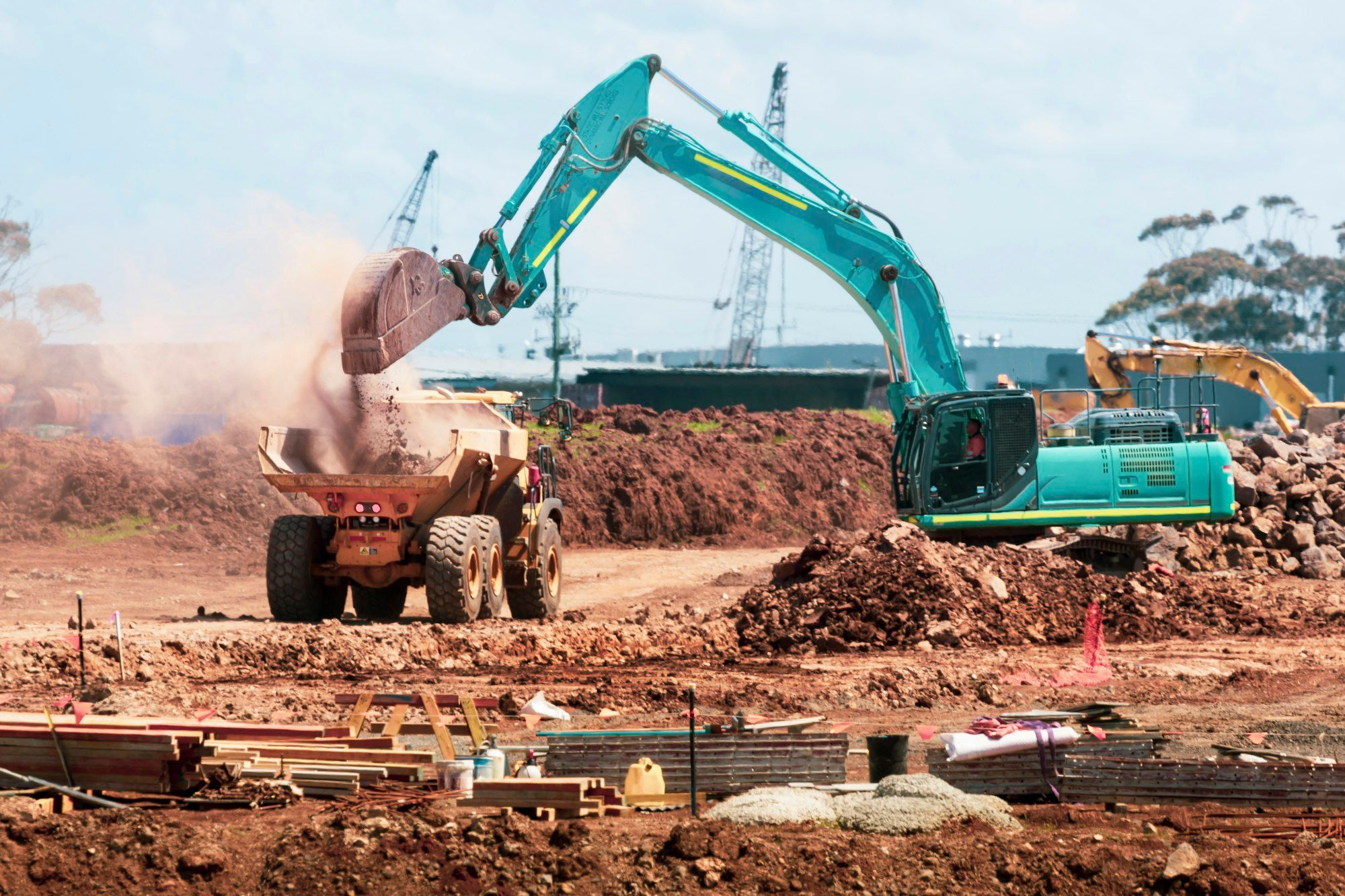
Equipment finance puts the machinery, vehicles and technology your business needs to work for you today, while you pay for them over time out of the revenue they help create. FastBiz Loans arranges equipment finance from $10,000 to $500,000, for new or used equipment, bought from a dealer or a private seller. Because the equipment usually forms the security, it’s often one of the most accessible ways to grow your capacity without emptying your bank account.
Below you’ll find what you can finance, the three main structures explained in plain English, how new, used and private sales differ, and where the ATO’s instant asset write-off fits in.
What equipment can you finance?
If it earns its keep in your business and can be clearly identified, there’s a good chance it can be financed. Common categories include:
- Vehicles: utes, vans, trucks, prime movers, trailers and fleet cars used for business.
- Yellow goods: excavators, skid steers, loaders, graders, forklifts and other earthmoving or materials-handling gear.
- Agricultural equipment: tractors, harvesters, sprayers, balers and irrigation systems.
- Manufacturing and workshop: CNC machines, lathes, presses, compressors, hoists and diagnostic tools.
- Hospitality and retail: commercial ovens, coffee machines, refrigeration, POS systems and shop fit-out items.
- Medical, dental and beauty: chairs, imaging equipment, lasers and treatment devices.
- Technology: servers, computers, printing equipment and specialised software bundled with hardware.
Lenders generally find it easiest to finance equipment that holds its value and has a clear second-hand market, such as vehicles and yellow goods. Highly specialised or custom items can still be financed; they may simply need a closer look at your business’s overall position.
Chattel mortgage, finance lease or hire purchase: what’s the difference?
The three structures differ mainly in who owns the equipment, how GST works and what happens at the end. None is “best” in general. The right one depends on how your business handles tax, cash flow and upgrades, which is why it pays to have a quick chat with your accountant alongside your lending specialist.
Chattel mortgage. Your business buys the equipment and owns it from the start. The lender takes a mortgage over the equipment (a “chattel” is simply a movable item) as security, and that mortgage is removed once you’ve repaid. Because you own it, your business can generally claim depreciation, and if you’re registered for GST you can generally claim the GST in the purchase price on your next BAS.
Finance lease. The lender buys the equipment and you pay regular rentals to use it. The lender stays the owner. Lease payments are generally treated as a business expense, and GST credits are claimed on each payment as you go rather than in one hit. At the end, you can usually pay an agreed residual to buy the equipment, extend the lease, or hand it back and upgrade.
Hire purchase. The lender buys the equipment and hires it to your business. Ownership passes to you once the final payment is made. For tax, your business is generally treated as the owner, and the ATO allows GST credits on a hire purchase to be claimed up front rather than payment by payment.
| Chattel mortgage | Finance lease | Hire purchase | |
|---|---|---|---|
| Who owns it during the contract | Your business | The lender | The lender |
| When you own it outright | From day one (mortgage removed at the end) | Only if you buy it at the end | After the final payment |
| GST credits | Generally claimed up front on the purchase | Claimed on each payment | Generally claimed up front |
| Depreciation claimed by | Your business, generally | The lender | Your business, generally |
| End of contract | Asset is yours, free of the mortgage | Buy, re-lease or return | Asset is yours |
| Often suits | Businesses wanting ownership and GST cash back early | Businesses that upgrade regularly, like tech | Businesses wanting ownership with a simple path to it |
Some contracts include a balloon or residual, which is a larger final payment that lowers your regular repayments. It can be handy for cash flow, but plan for it from day one so it’s not a surprise. Arrangements are often matched to the working life of the equipment, so you’re not still paying for something long after it’s been replaced.
New or used? Dealer or private sale?
You can finance all four combinations. What changes is the paperwork and how quickly the seller can be paid.
| Purchase type | What the lender will want | Speed notes |
|---|---|---|
| New, from a dealer | Tax invoice from the dealer | Usually the quickest — dealers know the process |
| Used, from a dealer | Tax invoice plus year, make, model and serial number or VIN | Quick, with a short identity check on the asset |
| Used, private sale | Seller’s details, their proof of ownership, serial number or VIN, and a sale agreement | Allow a little extra time for the seller and asset checks |
| Sale-and-buyback or refinance of owned gear | Proof of ownership and asset details | Assessed case by case |
For private sales, lenders check that the equipment isn’t already under someone else’s finance, so you’re not inheriting a debt with your new machine. That protects you as much as the lender.
How the instant asset write-off fits with equipment finance
The instant asset write-off lets eligible small businesses deduct the full cost of a qualifying asset in the year it’s first used or installed ready for use, instead of depreciating it over several years. Here’s where it stands, based on the ATO’s current guidance:
- 2025–26: businesses with aggregated turnover under $10 million could immediately deduct eligible depreciating assets costing less than $20,000 each, first used or installed ready for use between 1 July 2025 and 30 June 2026. This extension was legislated in 2025.
- From 1 July 2026: the $20,000 threshold has been made permanent for small businesses with aggregated turnover under $10 million. The ATO confirms this measure is now law.
- Per asset: the limit applies to each asset, so you can write off several qualifying items in the same year.
- Over the threshold: assets costing $20,000 or more generally go into the small business simplified depreciation pool instead.
Two practical points. First, timing is about when the asset is first used or installed ready for use, not when you sign the finance. Second, the structure matters: with a chattel mortgage or hire purchase your business is generally treated as the owner and may be able to claim it; with a finance lease the lender owns the asset, so the write-off generally isn’t yours to claim. Talk to your accountant before you buy. Our guide to equipment finance and the instant asset write-off goes into more detail.
Example scenario — illustrative only. Josh runs a two-truck earthmoving business outside Toowoomba. A council contract needs a third machine, so he finds a used excavator through a dealer. He gets the tax invoice with the serial number, completes the online enquiry, connects his business bank account and sends the invoice through. Once approved, he e-signs, the dealer is paid and the excavator is on site for the start of the job. His accountant confirms how the purchase sits with his depreciation.
What do lenders look at for equipment finance?
Lenders look at two things: your business and the equipment. On the business side, it’s the same basics as most business finance — trading history, steady revenue, an active ABN, an Australian resident owner or director, a business bank account and no undischarged bankruptcy. Your bank statements show whether the repayment fits comfortably.
On the equipment side, they look at what it is, its age and condition, how easily it could be resold, and whether the price is in line with the market. Equipment that holds its value makes the security stronger, which can make the whole application easier.
If you’re newer to business, equipment finance can still be possible because the asset carries weight in the assessment. See startup business loans for how newer businesses are assessed.
What you’ll need to apply
- A quote or tax invoice from the seller, with the equipment’s details
- 3–6 months of business bank statements, shared securely online
- Photo ID and your ABN or ACN
- Financial statements, only if the amount is over $150,000
- For private sales: the seller’s details and proof they own the equipment
Having the invoice ready is the single biggest thing that speeds up equipment finance. Without it, there’s nothing to pay.
When equipment finance isn’t the right fit
If what you need is cash for wages, stock or a marketing push, a small business loan is the better tool, since equipment finance is tied to the specific asset. If the purchase is small and you’ll only use it for a short job, hiring may be simpler than buying. And if you’re chasing the tax deduction alone, remember a deduction reduces tax on profit; it isn’t cash back in full. Buy equipment because it earns its keep.
Where equipment finance shines
Tradies adding a ute or trailer, farmers upgrading before seeding, transport operators adding a prime mover, clinics fitting out a new room, manufacturers adding capacity for a big order. If you work in construction and trades, transport and logistics or agriculture, you’ll find more industry-specific ideas on those pages.
Get your equipment working sooner
Found the machine? Get the invoice, then start your 60-second enquiry. A lending specialist will talk you through chattel mortgage, lease and hire purchase options for your situation. Every arrangement is priced on your business’s individual circumstances, and we look for the sharpest option available.
Your path to funds
Step 1
Pick your equipment and get a quote or tax invoice from the seller
Step 2
60-second online enquiry, then a call with a lending specialist
Step 3
Share bank statements and ID; send the invoice and seller details
Step 4
Decision, then e-sign your documents
Step 5
The seller is paid and you take delivery
Questions we get asked
Can I finance used equipment?
Yes. Used equipment can be financed from dealers or private sellers. The lender will want to know the item's age, condition and identifying details, such as a serial number or VIN, so it can confirm the equipment is what it says it is and is free of other finance.
Do I need a deposit for equipment finance?
Not always. Because the equipment usually forms the security, many businesses finance the full purchase price. A deposit or trade-in can still help in some situations, and your lending specialist will tell you whether it makes a difference for your application.
What's the difference between a chattel mortgage and a lease?
With a chattel mortgage your business owns the equipment from day one and the lender holds a mortgage over it until you've repaid. With a finance lease the lender owns the equipment and you pay to use it, with the option to buy it, upgrade or hand it back at the end.
Can I claim the instant asset write-off on financed equipment?
Often, yes, if your business is treated as the owner for tax purposes, which is generally the case with a chattel mortgage or hire purchase, and the asset meets the ATO's rules. Leased equipment is treated differently. Talk to your accountant about your own situation before you buy.
Can startups get equipment finance?
Sometimes. Because the equipment provides security, equipment finance can be one of the more accessible options for newer businesses. Businesses trading under six months are assessed case by case on the owners' experience, assets and plans.
How long does equipment finance take?
Straightforward applications can move quickly once your bank statements, ID and the supplier invoice are in. Private sales and older equipment can take a little longer because the seller's details and the equipment's identity need to be checked before the seller is paid.